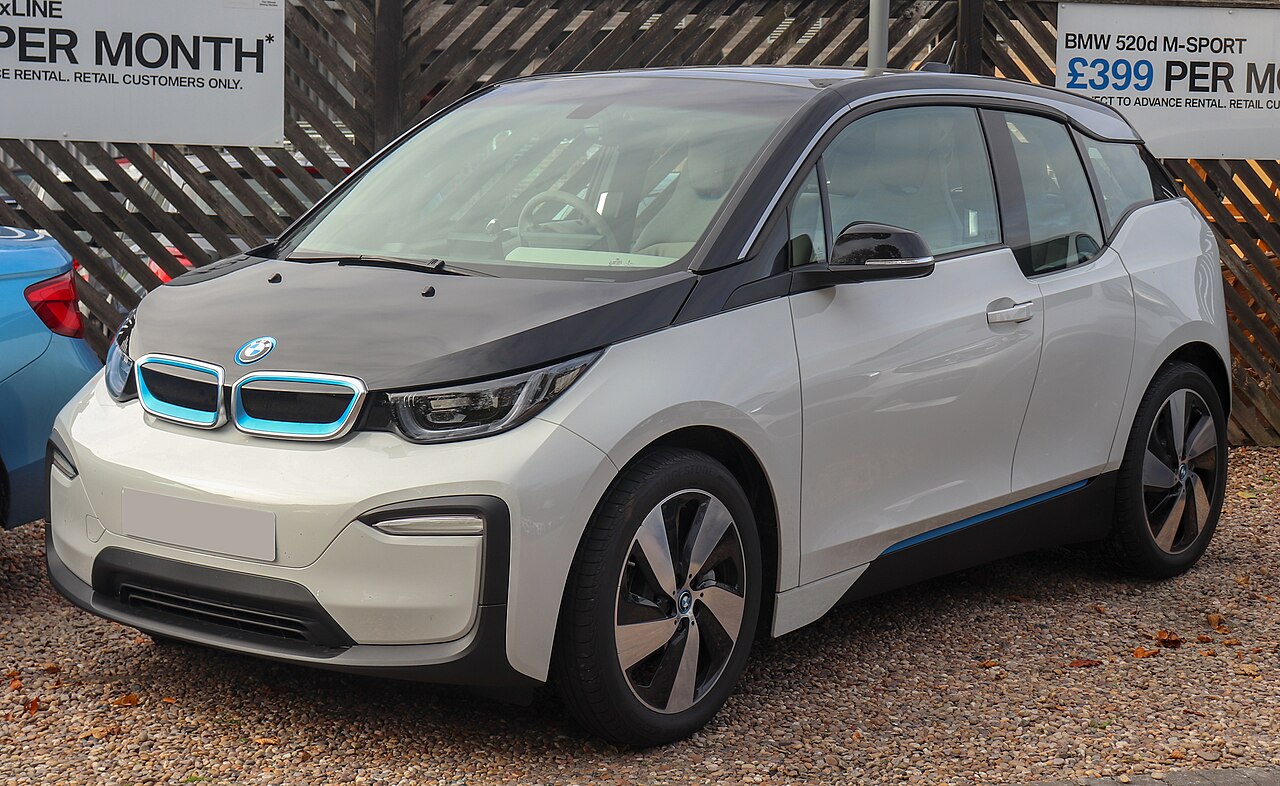
BMW i3 Weight Revealed: Base Model 1195 kg vs. i3s 1365 kg – A Deep Dive into Lightweight EV Design
When discussing electric vehicles, range and performance often dominate the conversation. However, a crucial factor underpinning both these attributes, especially for a groundbreaking model like the BMW i3, is its weight. Understanding the BMW i3 weight is key to appreciating its unique engineering, agile driving dynamics, and remarkable efficiency. From its initial launch, the i3 set new benchmarks for lightweight construction in the EV segment, a legacy carried forward by its sportier sibling, the i3s.
For those searching specifically for "Bmw I3 Gewicht," this article aims to provide a comprehensive breakdown, comparing the base model's impressive 1195 kg to the i3s's 1365 kg, and exploring the ingenious design choices that make these figures possible.
Unpacking the BMW i3 Weight: Base Model vs. i3s
The original BMW i3, unveiled globally in 2013, immediately stood out for its commitment to lightweight design. The base model, without the optional Range Extender, tipped the scales at a mere 1195 kilograms. This figure was not just impressive for an electric car but made it lighter than many conventional compact vehicles of its era, despite housing a substantial battery pack and a robust electric drivetrain.
Fast forward to the introduction of the sportier i3s, and the weight subtly shifted. The BMW i3s, particularly the I01 s (120 Ah) Edition RoadStyle variant, registers a curb weight of 1365 kg. This difference of approximately 170 kg isn't arbitrary. It reflects BMW's enhancements to elevate performance and handling in the 's' model. These improvements typically include:
- Larger Battery Capacity: While the core battery architecture remained similar, later models and especially the i3s often featured higher capacity batteries (like the 120 Ah in the example), which inherently add mass.
- Enhanced Drivetrain Components: The i3s boasts a more powerful electric motor (184 PS compared to the base i3's 170 PS), often requiring more robust components.
- Suspension and Chassis Modifications: To handle the increased power and provide a sportier driving feel, the i3s received a firmer suspension, wider track, and larger wheels, all contributing to additional mass.
- Styling and Aerodynamic Additions: Minor exterior tweaks, while perhaps not adding significant weight individually, can collectively contribute to the overall increase.
Despite the increase, the i3s remains commendably light for an EV, a testament to the underlying lightweight architecture shared across the i3 family. This meticulous attention to weight ensures that both models deliver a driving experience far more engaging than their compact dimensions might suggest.
The Engineering Marvel Behind the BMW i3's Lightweight Design
The impressive BMW i3 Lightweight Design: Carbon Fiber & Aluminum Mastery is not just a marketing slogan; it's a fundamental pillar of its existence. BMW pioneered a unique "LifeDrive" architecture specifically for the i3, comprising two distinct modules:
- The Drive Module: This lower module is primarily constructed from aluminum and houses the battery, electric motor, power electronics, and suspension components. Aluminum was chosen for its excellent strength-to-weight ratio and ease of manufacturing.
- The Life Module: This upper module forms the passenger cell and is crafted from high-strength carbon fiber reinforced plastic (CFRP). This material is incredibly strong and rigid, yet significantly lighter than steel. Its use eliminates the need for a B-pillar, allowing for unique coach-style doors that enhance cabin accessibility.
This innovative combination allows BMW to offset the inherent weight of the battery pack, a significant challenge for all EV manufacturers. The use of CFRP, a material more commonly found in high-performance sports cars and aerospace, was revolutionary for a mass-produced urban electric vehicle. It contributes not only to the low BMW i3 weight but also to exceptional torsional stiffness, enhancing safety and driving dynamics.
Beyond the core structure, every component, from the magnesium dashboard support to the thin-gauge glass, was optimized for weight. This holistic approach to lightweight construction is what allowed the base BMW i3 to achieve its sub-1200 kg figure, setting a benchmark for efficiency and agility.
Weight, Performance, and Efficiency: The i3's Golden Triangle
The direct relationship between low BMW i3 weight and its performance and efficiency cannot be overstated. A lighter vehicle requires less energy to accelerate, brake, and maintain speed, directly translating into better range and a more dynamic driving experience.
For the base BMW i3, its 125 kW (170 PS) electric motor, combined with a maximum torque of 250 Newton-meters available instantaneously from a standstill, enables brisk acceleration. The car sprints from 0 to 60 km/h in a mere 3.7 seconds and reaches 100 km/h in just 7.2 seconds. Its top speed is electronically limited to 150 km/h for efficiency reasons.
The sportier i3s, with its increased power output of 184 PS, builds upon this foundation. While exact 0-100 km/h figures might vary slightly, the i3s offers an even more exhilarating punch, with its top speed marginally increased to 160 km/h. This demonstrates How BMW i3's Low Weight Delivers Agile 0-100 km/h Performance, making it a joy to navigate city streets and beyond.
In terms of efficiency, the i3s (120 Ah) reports an impressive average consumption of just 14 kWh per 100 km. This low energy demand, combined with a battery capacity of 42 kWh, ensures practical ranges that are more than adequate for daily commuting. The original i3 offered a real-world range of 130 to 160 kilometers, a figure BMW's extensive testing indicated was sufficient for the majority of drivers, considering the global average daily drive is around 64 km.
The agile handling, precise steering, and immediate torque delivery are all direct benefits of the i3's low center of gravity (due to the underfloor battery) and its carefully managed weight. This results in a driving experience that is both responsive and fun, making it a true BMW.
The Range Extender: A Weight-Saving Compromise?
While the all-electric range of the i3 was sufficient for most, BMW offered an ingenious solution for those with longer commutes or range anxiety: the optional Range Extender (REX). This feature introduced a small, 25 kW (34 PS) two-cylinder gasoline engine, neatly packaged next to the electric drive unit over the rear axle.
The REX doesn't directly power the wheels but acts as a generator, maintaining the lithium-ion battery's charge level once it drops below a certain point. This extends the everyday usable range of the i3 to approximately 300 kilometers. Of course, adding a gasoline engine, a small fuel tank, and associated components inevitably impacts the BMW i3 weight. While the exact weight increase for the REX option isn't explicitly stated in all contexts, the price difference (€34,950 for base vs. €39,450 for REX at launch) hints at the added complexity and mass.
For some, the added weight of the REX was a worthwhile compromise, offering the best of both worlds: zero-emission electric driving for daily commutes and the flexibility of extended range for occasional longer journeys. It demonstrated BMW's pragmatic approach to EV adoption, addressing real-world concerns while still prioritizing efficiency and clever packaging.
Beyond the Numbers: Practical Implications for i3 Owners
The BMW i3, regardless of its specific weight configuration, offered substantial practical benefits to owners. Launched in Germany and other European markets in November 2013, followed by the USA, Japan, and China in the first half of 2014, it quickly garnered significant interest. Over 1.2 million fans on Facebook and more than 90,000 pre-registrations for test drives underscored its appeal.
Beyond the initial purchase price (€34,950 for the base model), the operational costs of the BMW i3 were a significant draw. BMW estimated that the maintenance and running costs over a three-year period were approximately 40% lower than those of a highly economical conventionally powered car like the BMW 320dA in Germany. This saving could be even greater in countries with strong electric vehicle incentives.
Despite its compact footprint (the i3s measures 4006 mm long and 1570 mm tall), the intelligent LifeDrive architecture provides a surprisingly spacious interior for up to four occupants. The lack of a central transmission tunnel and the 'lounge-like' cabin design enhance comfort. For a solo driver, the maximum luggage volume expands to a generous 1100 liters, making it a highly versatile urban companion.
Conclusion
The BMW i3 weight, whether it's the base model's 1195 kg or the i3s's 1365 kg, is a testament to BMW's visionary engineering. By meticulously integrating lightweight materials like carbon fiber reinforced plastic and aluminum, BMW successfully delivered an electric vehicle that was not only efficient and sustainable but also dynamically engaging and practical for everyday use. The i3 proved that an EV could be lightweight, agile, and fun to drive, setting a high standard for subsequent electric vehicles. Its clever design, efficient performance, and remarkably low running costs continue to cement its legacy as a true pioneer in the electric mobility landscape.