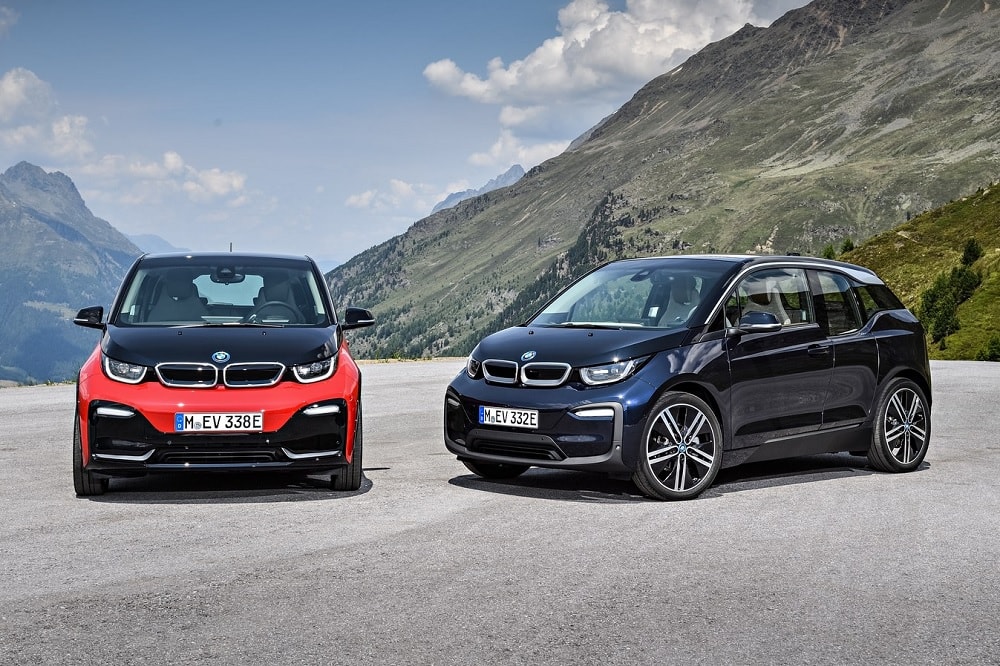
How BMW i3's Low Weight Delivers Agile 0-100 km/h Performance
The BMW i3 isn't just an electric vehicle; it's a testament to revolutionary engineering. From its inception, BMW aimed to redefine urban mobility, and a cornerstone of this vision was pioneering lightweight design. While many electric cars grapple with the inherent weight of large battery packs, the BMW i3 cleverly counteracts this challenge, making its Bmw I3 Gewicht a strategic advantage rather than a hindrance. This article delves into how the i3's remarkably low weight is not just about efficiency, but is the secret sauce behind its surprising agility and impressive 0-100 km/h acceleration.
The Engineering Marvel: How BMW Slashed the Bmw I3 Gewicht
At the heart of the BMW i3's lightweight philosophy is its unique "LifeDrive" architecture. This innovative construction separates the vehicle into two distinct modules: the "Life Module" and the "Drive Module." This revolutionary approach allowed BMW engineers to use materials precisely where their properties were most beneficial, resulting in a significantly reduced Bmw I3 Gewicht compared to many conventional vehicles of similar size.
The "Life Module," which forms the passenger cell, is crafted from carbon fiber-reinforced plastic (CFRP). This isn't just a fancy material; it's a game-changer. CFRP offers exceptional rigidity and crash safety while being approximately 50% lighter than steel and 30% lighter than aluminum. This material choice is a direct legacy of BMW's Formula 1 and aerospace expertise, bringing high-tech solutions to everyday driving. Building the passenger compartment from such an advanced, light material drastically reduces the overall mass of the car, setting a new benchmark for urban electric vehicles.
Beneath the CFRP passenger cell lies the "Drive Module," which houses the aluminum chassis, battery, electric motor, and suspension components. Aluminum was chosen here for its optimal balance of strength, lightweight properties, and its ability to effectively absorb crash energy. Integrating the heavy battery pack low in the chassis not only protects it but also contributes to an incredibly low center of gravity. This combination of an ultra-light CFRP upper structure and a sturdy aluminum foundation ensures structural integrity without piling on the pounds.
The result of this meticulous engineering is a remarkable curb weight. The base BMW i3 tips the scales at just 1,195 kilograms. To put this into perspective, it's lighter than many compact gasoline-powered cars, despite carrying a substantial battery pack. Even the sportier i3s 120 Ah Edition RoadStyle, with its larger battery and more powerful motor, maintains an impressive 1,365 kg. This commitment to lightweight construction is truly a masterclass in modern vehicle design, a subject explored in more detail in our article: BMW i3 Lightweight Design: Carbon Fiber & Aluminum Mastery.
Instant Torque Meets Low Weight: Unleashing the i3's Acceleration
The true magic of the BMW i3's low Bmw I3 Gewicht comes alive when you press the accelerator. Physics dictates that the less mass an object has, the less force is required to accelerate it. In an electric vehicle, where torque is available instantaneously, this relationship becomes exhilaratingly evident.
The BMW i3's electric motor, even in its standard configuration, produces a potent 125 kW (170 PS) and a maximum torque of 250 Newton-meters. What's crucial here is that this 250 Nm is available from a standstill, without waiting for an engine to rev up or gears to shift. Couple this immediate power delivery with the i3's minimal Bmw I3 Gewicht, and you have a recipe for truly agile performance.
The figures speak for themselves: the BMW i3 can sprint from 0 to 60 km/h in just 3.7 seconds, making it incredibly quick off the mark, ideal for navigating city traffic and merging confidently. The equally impressive 0-100 km/h acceleration time of 7.2 seconds puts it squarely in the territory of many performance-oriented compact cars, proving that efficiency doesn't have to come at the expense of dynamic driving. The higher-performance i3s variant, with its 184 PS motor, pushes these figures even further, offering an even more spirited drive.
This combination of instant torque and a featherlight body doesn't just make for impressive statistics; it translates directly into a fun and responsive driving experience. The i3 feels nimble, eager, and surprisingly potent, defying its compact dimensions and eco-friendly image. It's a car that genuinely enjoys being driven, making every urban commute an opportunity for a spirited journey.
Beyond Speed: The Multifaceted Benefits of a Lightweight EV
While rapid acceleration is a compelling benefit, the strategic reduction of the Bmw I3 Gewicht extends its advantages far beyond mere speed. This design philosophy underpins the i3's overall efficiency, handling, and even its running costs.
- Enhanced Efficiency and Range: Less weight means less energy is required to move the vehicle. This directly translates into better energy consumption – the i3 (120 Ah) boasts an average consumption of 14 kWh per 100 km. Consequently, the practical range of the i3 is optimized. With its standard battery, the i3 offers a real-world range of 130 to 160 kilometers, which BMW's extensive testing with MINI E and BMW ActiveE fleets showed is more than sufficient for the vast majority of daily drivers (global average daily commute is just 64 km).
- Superior Handling and Agility: The low Bmw I3 Gewicht combined with the underfloor battery's low center of gravity gives the i3 exceptional handling characteristics. It feels planted, responsive, and incredibly agile, especially in tight urban environments. Its compact dimensions (4006 mm long, 1570 mm high) allow for easy maneuvering and parking, while the nimble chassis makes navigating city streets a joy rather than a chore.
- Reduced Braking Distances and Wear: A lighter vehicle requires less effort to stop. This translates to shorter braking distances, contributing to enhanced safety. Furthermore, less strain is placed on the braking system, potentially reducing wear and tear on components over time.
- Lower Running Costs: The efficiency gains from lightweight construction directly contribute to lower operating costs. BMW's analysis showed that the i3's running and maintenance costs over three years were approximately 40% lower than a highly efficient BMW 320dA in Germany. This includes reduced energy consumption, less wear on tires and brakes, and often lower insurance premiums due to the car's innovative construction and electric powertrain.
These benefits collectively paint a picture of a vehicle that is not just fast, but also smart, sustainable, and surprisingly economical to own and operate.
Weighing Options: Base Model vs. Range Extender vs. i3s
BMW offered several variants of the i3, each appealing to different driver needs and preferences, and each with a slightly different Bmw I3 Gewicht and performance profile.
- The Pure Electric Base Model: Starting at €34,950 in Germany at its launch, the base i3 represents the purest expression of BMW's electric vision. With its 1,195 kg curb weight, it offers the most agile and sprightly driving experience, benefiting maximally from the lightweight design. It's ideal for drivers with predictable daily routes and access to charging infrastructure.
- The Range Extender (REX) Variant: For those seeking extra peace of mind or longer journey capabilities, BMW offered an optional Range Extender. This featured a small 25 kW (34 PS) two-cylinder gasoline engine positioned next to the electric drive unit over the rear axle. Its sole purpose was to maintain the battery's charge level once it dropped below a certain threshold, extending the everyday range to around 300 kilometers. While providing valuable flexibility, the REX added a bit of Bmw I3 Gewicht (and complexity), increasing the base price to €39,450. This additional weight slightly impacts the 0-100 km/h acceleration, but the trade-off for extended range was a compelling factor for many early adopters.
- The Sportier i3s: Introduced later, the i3s variant offered a more performance-oriented package. With a more powerful 184 PS motor and sportier suspension tuning, it pushed the dynamic capabilities further. Its curb weight of 1,365 kg (for the 120 Ah Edition RoadStyle) is higher than the original base i3, but the increased power output still ensures exhilarating acceleration, with a slightly higher top speed of 160 km/h. The i3s caters to drivers who prioritize a sportier feel and are willing to accept a marginally higher Bmw I3 Gewicht for enhanced power and handling.
Understanding these distinctions helps potential owners choose the BMW i3 that best aligns with their priorities, whether it's maximum agility, extended range, or a more performance-focused drive.
The BMW i3 stands as a remarkable example of how thoughtful engineering can overcome inherent challenges. Its precisely managed Bmw I3 Gewicht, achieved through a pioneering combination of carbon fiber and aluminum, is not merely a technical specification. It is the fundamental ingredient that unlocks the car's surprising agility, its zippy 0-100 km/h performance, and its overall efficiency. The i3 proved that an electric vehicle could be both sustainable and incredibly fun to drive, setting a high bar for urban mobility and leaving a lasting legacy in the automotive world.